Oneyear Visual Design.
The Basic Course is taught following a single theme approach with cycles of lessons on theory integrated with workshop exercises and subjects. In this way students acquire the solid cultural, methodological and operative foundations necessary for following a Master’s course in Visual Design and Web Design.;
Classes ▼
- Basic TypographyMarta Bernstein
- PhotographySabine Schweigert
- Computer DesignErasmo Ciufo
- Form And Colour LaboratoryNarciso Silvestrini
- History Of DesignBarbara Camocini
- SketchingClaudio Fassini
- Visual Design FoundationsSerena Brovelli, Davide Fornari
- History Of Graphic Design FoundationsSilvia Sfligiotti
Form And Colour Laboratory
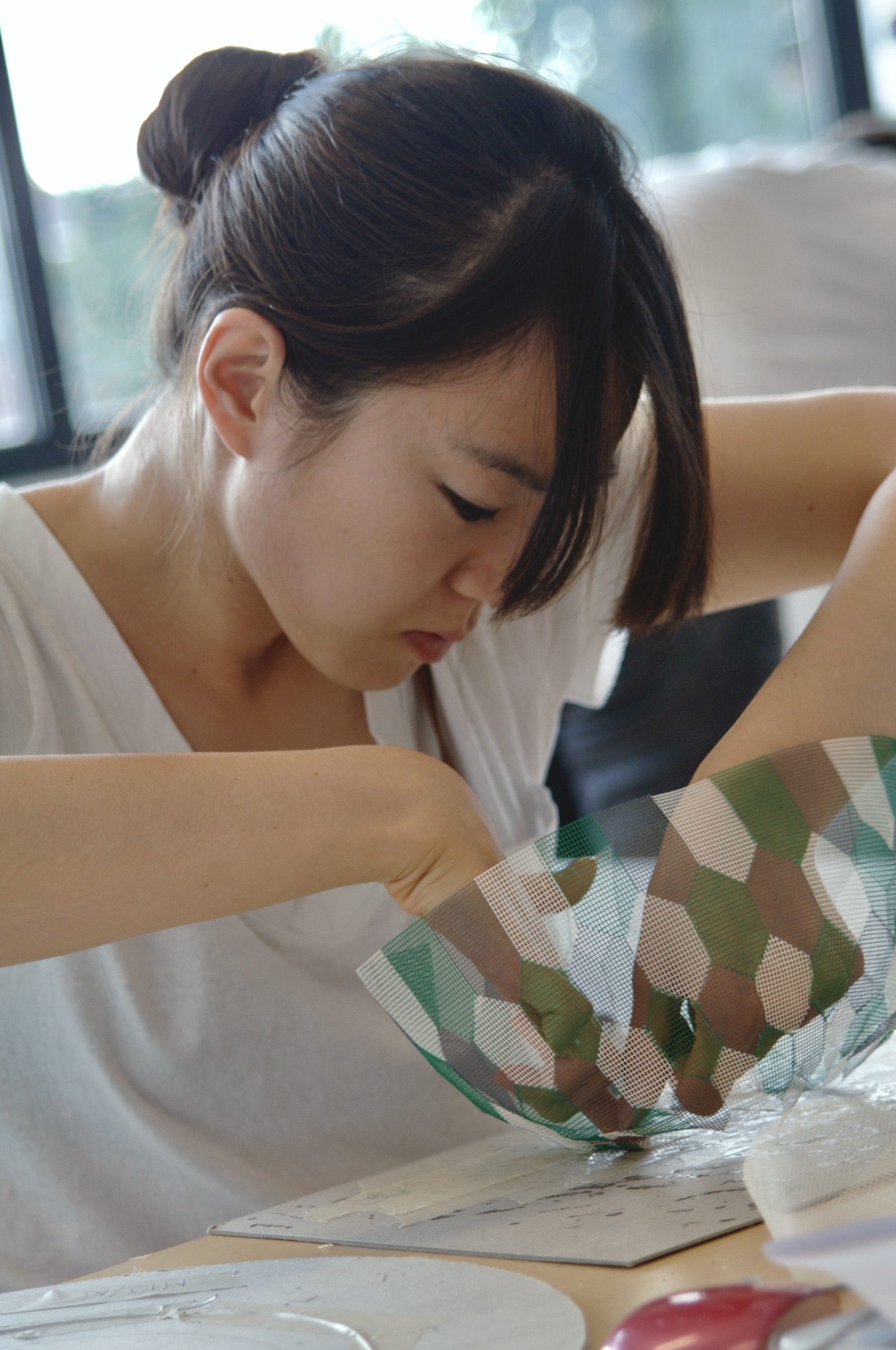
The course has the structure of a laboratory where students study and realize bi/tridimensional models of shapes, objects and systems related to color design issues. List of the contents as follows:
- Colour is not a transcultural truth
- Colour has a history
- Basic terminology
- Chromatic syntheses: additive, subtractive, optical
- From the triangle of colours, to the hexagon, to the cube
- Fractal generation of the chromatic polygon
- Marginal colours (W. Goethe)
- The RGB_CMY cube: vertices (point), edges (line), faces (surfaces), volume (space)
- The double tetrahedron of colours: a model of material states: gaseous, liquid, solid
- The octahedron and its development: “6” vertices, “6” points of view, “6” tetrachromatic combinations
- Chromatic conjugations according to the Islamic chromatic system
- Chromatic conjugations according to R. Arnheim’s colour triangle
- Chromatic interpretation of Buckminster Fuller’s spatial triangle: 1 + 1 = 4
- Chromatic conjugations: the system of possible permutations between three data elements
- Margin type and related perceptive inductions
- Phenomenal transparency: the four conditions
- Transparency and spatiality
- The three modes of colour appearance: volume, surface, film
Teachers
The Basic Course is taught following a single theme approach with cycles of lessons on theory integrated with workshop exercises and subjects. In this way students acquire the solid cultural, methodological and operative foundations necessary for following a Master’s course in Visual Design and Web Design.